How and When to Use High Speed Sync Flash for Portrait Photography
In this video we will be learning how and when to use the High Speed Sync function when it comes to doing outdoor off-camera flash photography for shooting portraits.
You will learn that in situations where the ambient light is a lot and you still want to use a shallow depth of field, the High Speed Sync feature can come to your aid as it allows you to go faster than the Sync Speed of the camera, thereby allowing you to cut down light and enabling you to use a wider aperture. Here’s the video:
This video is from our Off-Camera Flash for Beginners Course, which has 33 videos and 4 hours of video content. You can access the full course using the link below:
Off-Camera Flash for Beginners Course
Video Summary
This tutorial by Creative Pad Media explains how to use High Speed Sync (HSS) to capture professional outdoor portraits with a shallow depth of field, even in bright daylight.
Summary of the Tutorial:
- The Challenge of Bright Light: Shooting outdoors at a wide aperture (e.g., f/1.8) to blur the background often lets in too much light, overexposing the image [04:23]. Standard flashes are limited by a “sync speed” (usually 1/200th or 1/250th of a second); exceeding this speed normally causes a black band to appear across the photo [05:29].
- High Speed Sync (HSS) Solution: HSS allows your flash to fire at shutter speeds much faster than the standard sync speed (e.g., 1/500th, 1/4000th). This enables you to use a fast shutter speed to darken a bright background while the flash illuminates the subject [05:49].
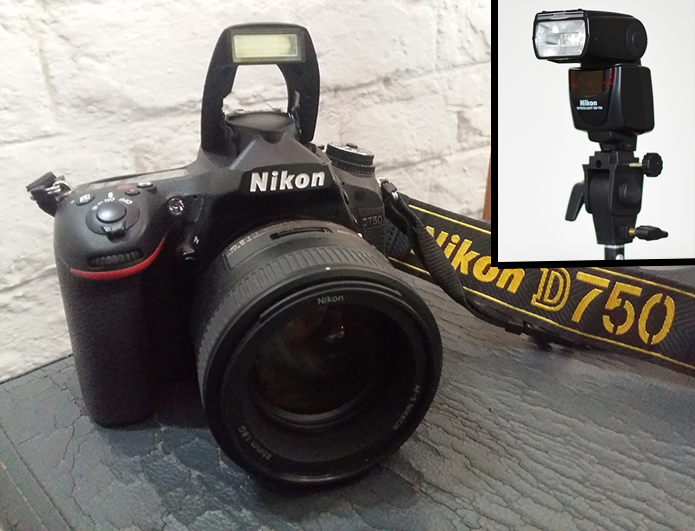
- Setup Requirements: Both your flash and your camera must support HSS/Auto FP sync [06:17]. The instructor demonstrates activating this on a Nikon d750 via the custom setting menu [06:41].
- The Two-Step Process:
- Ambient Exposure: Set your camera (ISO 100, f/1.8) and increase the shutter speed until the background looks properly exposed (e.g., 1/640th sec), even if the subject in the shade is dark [07:51].
- Flash Exposure: Turn on the flash (off-camera) to light the subject. Because of HSS, there is no banding, and the subject is perfectly balanced with the background [08:38].
- Equipment Recommendation: The instructor uses and recommends the Godox V860II flash and a compatible transmitter for reliable HSS performance [02:29].