What Aperture to Use in Studio Photography – Do You Need a Light Meter?
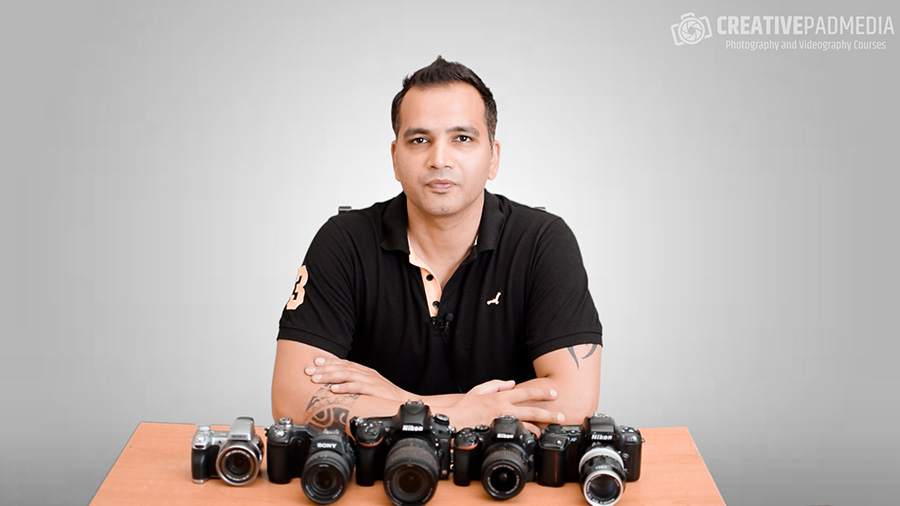
In this video we will be learning about what aperture to use in Studio Photography. As you will find out, Aperture is a very important setting in studio photography because it can help us control the exposure on the shot very easily and quickly perform a trial and error. It also helps us in not having to buy an expensive light meter. Here’s the video:
Video Summary
This tutorial explains how to choose the correct aperture (f-stop) for studio photography and addresses whether a light meter is necessary for beginners.
Core Concepts of Aperture in the Studio
- The Inverse Relationship [00:24]: A higher f-stop number (e.g., f/11) means a smaller aperture hole, while a smaller f-stop number (e.g., f/2.8) opens the hole wider.
- Depth of Field [01:21]: In studio portraits, a shallow depth of field (blurred background) is often less important because photographers usually want the subject’s entire face in sharp focus. Therefore, moderately high f-stops are common.
- Light Meters [02:11]: While professional studios use light meters to calculate the exact f-stop needed for a specific flash strength, they can be expensive. The instructor notes that they are not essential for beginners on a budget.
Practical Workflow and Trial & Error
- Starting Settings [04:08]: A recommended starting point for studio work is ISO 100, Shutter Speed 1/200, and Aperture f/8.
- Adjusting Exposure [04:32]: * If the image is too bright, increase the f-stop (e.g., from f/8 to f/11) to restrict light [05:19].
- If the image is too dark, decrease the f-stop (e.g., from f/8 to f/5.6) to let more light in [04:37].
- Demonstration [06:18]: The video includes a live test using a mannequin, showing how switching from f/8 to f/11 fixes an overexposed shot [07:52].
Challenges with Shallow Depth of Field [09:35]
Achieving a blurred background (e.g., at f/1.8) is difficult in a studio because the powerful flash often causes extreme overexposure. Suggested workarounds include:
- Using an ND Filter to block excess light [10:10].
- Using the Modeling Lamp instead of the flash [10:25].
- Using High-Speed Sync (HSS) if the equipment supports it [11:02].
Important Links
This video is from our Studio Photography for Beginners Course, which has 31 videos and 4 hours of content. You can access the full course via Udemy, using the link below:
Studio Photography for Beginners Course