Should You Use Auto-ISO in Photography? Here is the Real Truth
Is Auto ISO the secret to faster and easier photography, or does it compromise control? In this video, we dive into the truth about Auto ISO, exploring how it works and when it’s best to use it. Learn how this feature can simplify your shooting process, letting you focus more on composition and creativity. Perfect for beginners looking to improve their technical skills or experienced photographers seeking efficiency, we’ll show you the pros, cons, and real-world scenarios where Auto ISO shines. Watch now to discover if this setting deserves a place in your photography workflow!
This video is from our Photography for Beginners Course.
Video Summary:
This tutorial explains the importance of Auto ISO in photography, especially for fast-paced situations. When shooting in manual mode, adjusting shutter speed, aperture, and ISO for correct exposure can be slow. Auto ISO automates the ISO selection, allowing you to focus only on creative controls (shutter speed for motion, aperture for depth of field) while the camera instantly sets the correct ISO for the lighting. This dramatically speeds up shooting, making it essential for dynamic genres like wildlife, events, or street photography where lighting and subjects change rapidly.
Timestamps:
0:46 – Introduces the problem: Manual ISO adjustment is slow and frustrating in fast-paced shooting situations.
1:04 – Uses a bird photography example to illustrate the tedious process of manually tweaking ISO for correct exposure after setting shutter speed and aperture.
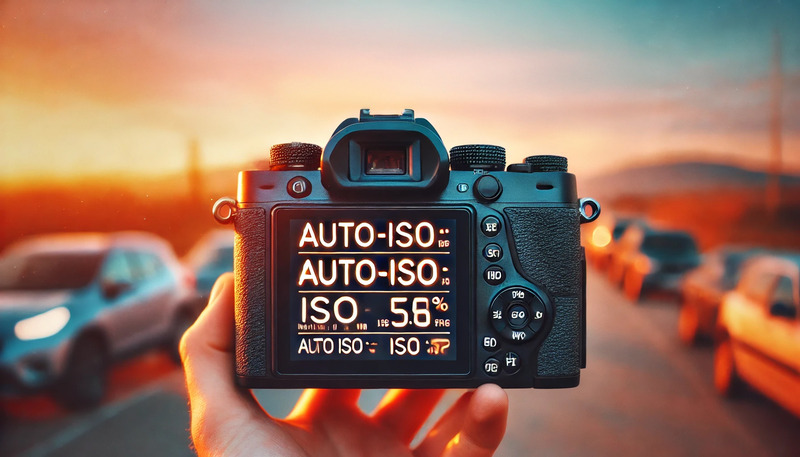
3:01 – Explains how Auto ISO solves this by automatically selecting the correct ISO value in a fraction of a second, outsourcing that step to the camera.
4:26 – Emphasizes the key benefit: You retain full creative control over shutter speed and aperture, while the camera handles exposure via ISO, making photography “very, very fast.”
4:50 – Brief instructions on how to activate Auto ISO on Canon and Nikon cameras, including setting a high “ISO Auto Max” value.
6:28 – Exercise Begins: Compares shooting two subjects (flowers in shade, a plant in sun) with Manual ISO vs. Auto ISO.
7:36 – Manual ISO Demonstration: Shows the slow, multi-step process of adjusting shutter speed, aperture, and then manually dialing in ISO while watching the light meter for each subject.
10:52 – Auto ISO Demonstration: Shows how, with Auto ISO enabled, you only adjust shutter speed and aperture. The camera instantly compensates the ISO, allowing for rapid, consecutive shots even as conditions change (e.g., increasing shutter speed for wind).
13:24 – Conclusion: Recommends using Auto ISO in any situation where time is limited, the subject is moving, or lighting is changing—specifically naming event, street, and wildlife photography.